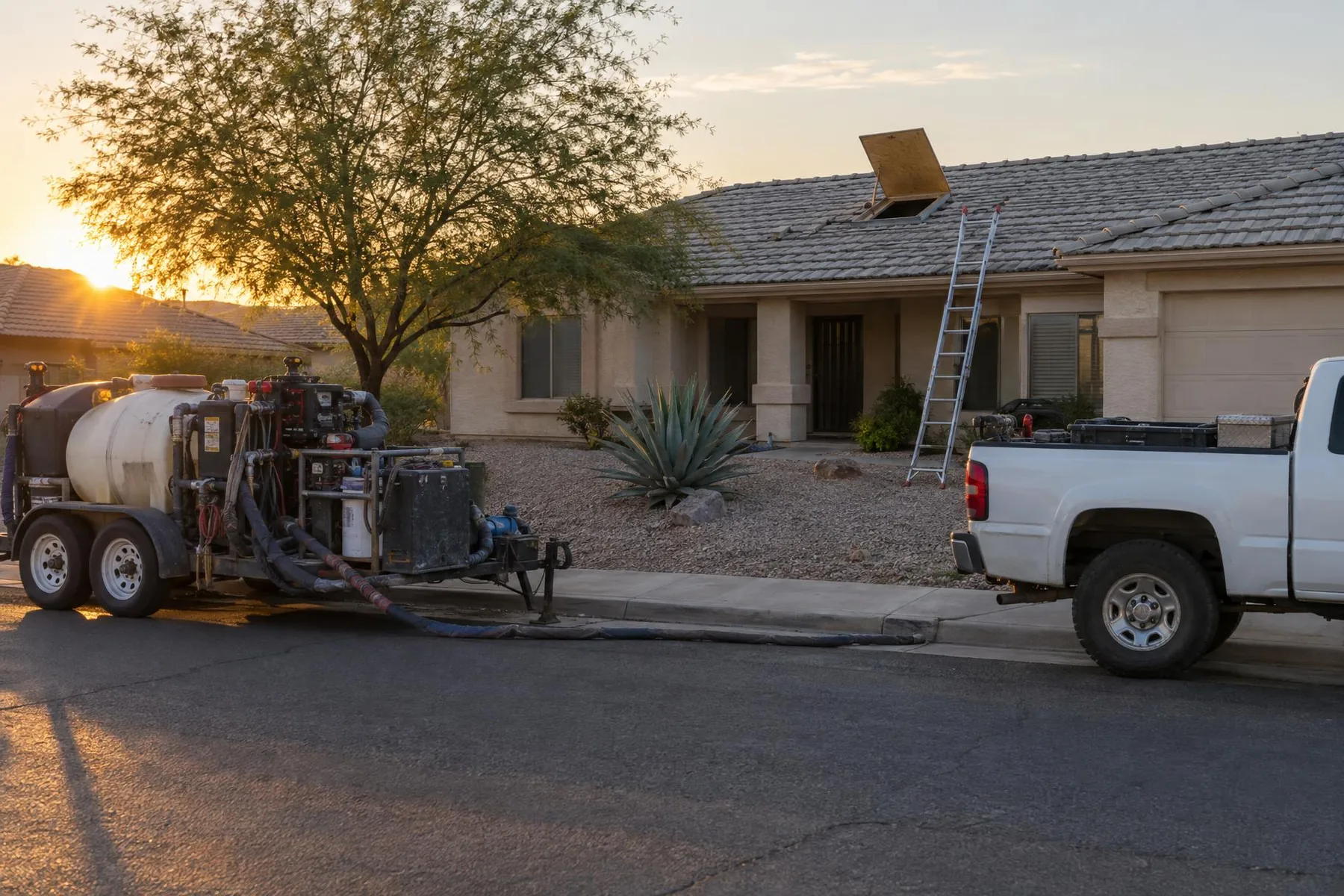
Attics around Phoenix reach roughly 130 degrees in summer, and air conditioning ducts typically cross that heat. Foam applied to the underside of the roof deck shuts the attic off from outdoor air and moves those ducts into conditioned space. Our installer builds the layer in thin passes, checks it against the estimate and keeps foam away from vents and the air handler. Rooms beneath the attic stop soaking up heat from overhead, and cooled air no longer has to travel through a 130 degree space to reach the vents.

Garage walls, finished walls and attic surfaces in Avondale houses can each receive foam, matched to the surface. Open-cell foam is cheaper and fills deep cavities, while closed-cell foam offers higher R-value per inch where a roof deck or shallow bay demands it. Foam, depth and surface appear on every line of the written estimate. We cover floors and furniture beforehand, and you tour the finished work with the crew before it leaves. Request separate pricing for each surface to spread the job across several seasons.

A thin, matted layer in an older attic frequently calls for added material, not a complete rebuild. Blown-in cellulose or fiberglass is spread over the attic floor at an even depth and reaches corners that batts miss. Where drywall is already hung, this is the most economical choice, and the estimate states the final depth. Material that is wet, flattened or damaged by pests can be taken out first, priced as a separate line. Depth markers set in the attic let you check the finished layer yourself.

New Construction Spray Foam Insulation
Avondale builders can book foam between rough-in and drywall. In a new home, foam under the roof deck and on the exterior walls delivers continuous coverage and an airtight shell from day one. Our crew schedules after the framers, electricians and plumbers have finished. Each surface carries a single price and a single scheduling contact, so insulation never slows the drywall crew. Open framing also lets foam reach each cavity without access holes, an advantage finished walls lack. Rim joists, corners and plate lines are sealed in the same visit, and the crew measures thickness before the drywall goes up.

Commercial Spray Foam Insulation
Metal conducts heat, so shops, warehouses and light commercial buildings warm up quickly. Closed-cell foam on the metal panels is the standard fix, sprayed in controlled passes. We mask doors, vents and equipment and set the schedule with the owner so business continues. Roof and wall areas are priced apart, letting a manager spread the work over budgets. Big buildings are sprayed section by section, so staff and stock only relocate as far as needed. Panels, sidewalls and overhead doors each have a line on the quote.

Garage Spray Foam Insulation
When a garage shares a wall with the house, its heat flows directly into the neighboring rooms. Foam on the walls shared with the house and on the ceiling under any room above slows the flow. Wall height and foam type are listed on the estimate, making the figure easy to verify. We protect vehicles, tools and stored boxes during spraying, and the finished garage no longer warms the house. Closed-cell or open-cell foam can be priced for the walls, depending on wall depth and budget. A garage ceiling under a bedroom is worth a quote as well, since heat climbs into that room all summer.